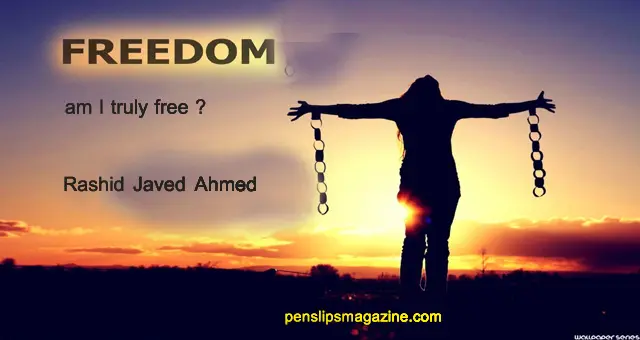
Freedom, am I truly free ?Rashid Javed Ahmed
Am I truly free?
Rashid Javed Ahmed
A Philosophical and Social Inquiry
Freedom — the very word conjures an image of wide, open skies, where a person is the sovereign of their own will, the author of their own decisions, beholden to no one. The young person standing at the threshold of adulthood often believes precisely this: that they have at last become free — that they need no longer seek anyone’s permission. But is this freedom genuine, or merely a pleasant illusion?
When we examine the human being within a social context — particularly within a joint family system — this question deepens considerably. For here, every decision ceases to be the affair of one individual alone; it becomes the business of the entire family, and of society at large.
The Philosophical Concept of Freedom
Philosophy recognizes two principal forms of freedom: the first is Negative Liberty — the absence of external constraint; the second is Positive Liberty — the capacity to live in accordance with one’s authentic desires and aspirations.
The philosopher Jean-Jacques Rousseau wrote: “Man is born free, yet everywhere he is in chains.” These chains are not forged solely by governments or laws — they are equally the chains of social convention, custom, family, and culture. Aristotle went further still, declaring that “man is by nature a social animal” — suggesting that to exist outside society is to act against one’s very nature.
On this basis, we may reasonably conclude that human freedom is never absolute or boundless — it is always circumscribed within the web of social relationships.
Adulthood and the Illusion of Freedom
When a young person reaches adulthood, they become legally mature — but this does not mean they have been absolved of social obligation. The law grants them the right to vote, to drive, to enter into contracts — yet society expects them, in turn, to remain mindful of the feelings of parents, siblings, and community.
Consider this: a twenty-year-old decides to pursue the subject he loves. This is his right. Yet if his parents hold different expectations, if the family’s finances are strained, or if a certain tradition has long been observed in the household — then his so-called free choice inevitably affects the lives of many others. Is he, then, truly free?
At the psychological level, too, this illusion of freedom is a complex matter. The psychologist Erich Fromm, in his landmark work Escape from Freedom, argued that human beings are themselves afraid of freedom — because freedom brings responsibility, and many find this burden too heavy to bear.
The Joint Family System and Individual Freedom
In the joint family systems of Pakistan and South Asia, the boundary between the individual and the family is exceedingly blurred. Here, the counsel of elders is accorded great weight, decisions are frequently made collectively, and the subordination of personal desire to collective well-being is considered not sacrifice but virtue.
On one hand, this system is a wellspring of security, love, and belonging. On the other, it can quietly suffocate the individuality of its members. When the choice of a spouse, the selection of a profession, or the question of where to live all become family matters, what space remains for the young person’s own sovereign will?
Yet there is another side to consider: if a person were to make every decision in complete isolation, indifferent to those around them, they would be called not free but selfish. Herein lies the truth — the ability to strike a balance between complete personal freedom and complete social obligation is itself the mark of genuine maturity.
Freedom and Responsibility — Two Sides of One Coin
True freedom is not separate from responsibility — it is only made whole by responsibility. When we say that someone is free, we do not mean that they may do as they please without regard for the consequences their actions visit upon others. The real test of freedom is whether a person, with deliberation and consideration for those around them, charts their own course.
In the view of the philosopher Immanuel Kant, freedom and morality are inseparable — freedom is moral only when it is exercised with respect for the rights of others. John Stuart Mill similarly held that one person’s freedom ends precisely where harm to another begins.
Thus, the freedom available to a person living within society is a conditional freedom — they are indeed free, but that freedom carries with it the inescapable obligation to honour the rights and sensibilities of others.
Conclusion
If a young person upon reaching adulthood believes themselves to be entirely and unconditionally free, that belief is a sign of immaturity. But if, under the weight of family or social pressure, they suppress every desire of their own, that too is no healthy way to live. True freedom lies somewhere between these two extremes — in that space where the individual preserves their own identity while still honouring the bonds of relationship and community.
The human being is part of society — and society is part of the human being’s very existence. Just as a river that abandons its banks does not achieve freedom but becomes a flood, so too the person who severs their social ties does not attain liberation — they merely lose their roots.
Real freedom is that which is exercised with wisdom, with respect, and with love. For the flower of freedom blooms in the soil of society — it cannot bloom anywhere else.
کیا میں آزاد ہوں ؟
ایک فلسفیانہ و سماجی جائزہ
آزادی — یہ لفظ سنتے ہی ذہن میں ایک وسیع و کھلی فضا کا تصور ابھرتا ہے، جہاں انسان اپنی مرضی کا مالک ہو، اپنے فیصلے خود کرے، اور کسی کا محتاج نہ ہو۔ بلوغت کی دہلیز پر قدم رکھنے والا نوجوان بھی اکثر یہی سمجھتا ہے کہ اب وہ ”آزاد” ہو گیا ہے — اب اسے کسی سے اجازت لینے کی ضرورت نہیں۔ لیکن کیا یہ آزادی حقیقی ہے یا محض ایک خوشگوار وہم؟
جب ہم انسان کو سماجی تناظر میں دیکھتے ہیں — خصوصاً مشترکہ خاندانی نظام میں — تو یہ سوال اور بھی گہرا ہو جاتا ہے۔ کیونکہ یہاں ہر فیصلہ صرف فرد کا نہیں، بلکہ پورے خاندان اور سماج کا معاملہ بن جاتا ہے۔
آزادی کا فلسفیانہ تصور
فلسفے میں آزادی کی دو بڑی اقسام ہیں: پہلی ”منفی آزادی” (Negative Liberty) — یعنی کسی بیرونی رکاوٹ کا نہ ہونا، اور دوسری ”مثبت آزادی” (Positive Liberty) — یعنی اپنی اصل خواہشات کے مطابق زندگی گزارنے کی صلاحیت رکھنا۔
فلسفی ژاں ژاک روسو نے لکھا تھا: ”انسان آزاد پیدا ہوتا ہے، لیکن ہر طرف زنجیروں میں جکڑا ہوا ہے۔” یہ زنجیریں صرف حکومت یا قانون کی نہیں، بلکہ سماج، رواج، خاندان اور ثقافت کی بھی ہیں۔ ارسطو نے تو یہاں تک کہا تھا کہ ”انسان فطرتاً ایک سماجی حیوان ہے” — یعنی سماج سے باہر رہنا اس کی فطرت کے خلاف ہے۔
اس بنیاد پر ہم کہہ سکتے ہیں کہ انسانی آزادی کبھی مکمل اور لامحدود نہیں ہوتی — یہ ہمیشہ سماجی رشتوں کے دائرے میں محدود رہتی ہے۔
بلوغت اور آزادی کا وہم
جب نوجوان بلوغت کو پہنچتا ہے تو وہ قانونی طور پر ”بالغ” ضرور ہو جاتا ہے، لیکن اس کا یہ مطلب نہیں کہ وہ سماجی ذمہ داریوں سے آزاد ہو گیا۔ قانون اسے ووٹ دینے، گاڑی چلانے اور معاہدے کرنے کا حق دیتا ہے — لیکن سماج اس سے توقع رکھتا ہے کہ وہ والدین، بھائی بہن، یا برادری کے جذبات کا بھی لحاظ رکھے۔
مثال کے طور پر: ایک بیس سالہ نوجوان فیصلہ کرتا ہے کہ وہ اپنا پسندیدہ مضمون پڑھے گا۔ یہ اس کا حق ہے۔ لیکن اگر اس کے والدین کی توقعات مختلف ہیں، گھر کی مالی حالت نازک ہے، یا خاندان میں کوئی روایت چلی آ رہی ہے — تو اس کا ”آزاد فیصلہ” دراصل کئی لوگوں کو متاثر کرتا ہے۔ تو کیا وہ واقعی آزاد ہے؟
نفسیاتی سطح پر بھی آزادی کا یہ وہم پیچیدہ ہے۔ ماہرِ نفسیات ایرک فروم نے اپنی کتاب Escape from Freedom میں بتایا کہ انسان آزادی سے خود ڈرتا ہے، کیونکہ آزادی کے ساتھ ذمہ داری بھی آتی ہے — اور بہت سے لوگ یہ بوجھ اٹھانے سے گھبراتے ہیں۔
مشترکہ خاندانی نظام اور فردی آزادی
پاکستان اور جنوبی ایشیا کے مشترکہ خاندانی نظام میں فرد اور خاندان کے درمیان کی سرحد بہت دھندلی ہے۔ یہاں بڑے بزرگوں کی رائے کو اہمیت دی جاتی ہے، فیصلے اکثر مل کر کیے جاتے ہیں، اور ذاتی خواہشات کو اجتماعی بھلے کے لیے قربان کرنا عام بات ہے۔
ایک طرف یہ نظام سماجی تحفظ، محبت اور اپنائیت کا سرچشمہ ہے — لیکن دوسری طرف یہ فرد کی انفرادیت کو کچل بھی سکتا ہے۔ شادی کا فیصلہ، پیشے کا انتخاب، رہنے کی جگہ — یہ سب معاملات جب ”خاندانی مسئلہ” بن جائیں تو نوجوان کا اپنا حق کہاں رہتا ہے؟
البتہ اس کا دوسرا پہلو بھی ہے: انسان اگر بالکل اکیلا فیصلے کرے اور کسی کو خاطر میں نہ لائے، تو اسے ”آزاد” نہیں بلکہ ”خودغرض” کہا جائے گا۔ یعنی مکمل آزادی اور مکمل سماجی ذمہ داری میں توازن قائم کرنا ہی اصل بلوغت کی نشانی ہے۔
آزادی اور ذمہ داری — دو پہلو ایک سکے کے
حقیقی آزادی دراصل ذمہ داری سے الگ نہیں — یہ ذمہ داری کے ساتھ ہی مکمل ہوتی ہے۔ جب ہم کہتے ہیں کہ کوئی شخص ”آزاد” ہے، تو اس کا مطلب یہ نہیں کہ وہ جو چاہے کرے اور باقیوں پر اس کے اثرات کی پرواہ نہ کرے۔ بلکہ آزادی کا اصل امتحان یہ ہے کہ انسان سوچ سمجھ کر، دوسروں کا لحاظ رکھتے ہوئے، اپنا راستہ خود چنے۔
فلسفی امانوئل کانٹ کی نظر میں آزادی اور اخلاق لازم و ملزوم ہیں — آزادی اسی وقت اخلاقی ہے جب ہم دوسروں کے حقوق کا بھی احترام کریں۔ اسی طرح جان سٹورٹ مل نے کہا کہ کسی کی آزادی وہاں ختم ہو جاتی ہے جہاں دوسرے کو نقصان پہنچنا شروع ہو۔
گویا سماج میں رہنے والے انسان کی آزادی ”مشروط آزادی” ہے — یعنی اسے آزادی حاصل ہے، لیکن اس آزادی کے ساتھ دوسروں کے حقوق اور جذبات کا خیال رکھنا بھی لازمی ہے۔
بلوغت کو پہنچنے والا نوجوان اگر اپنے آپ کو مکمل طور پر آزاد سمجھے تو یہ ناپختگی کی علامت ہے، اور اگر خاندان یا سماج کے دباؤ میں اپنی تمام خواہشات کو دبا لے تو یہ بھی صحت مند رویہ نہیں۔ اصل آزادی ان دونوں انتہاؤں کے درمیان کہیں ہے — جہاں فرد اپنی شناخت برقرار رکھتے ہوئے سماجی رشتوں کو بھی نبھائے۔
انسان سماج کا حصہ ہے — سماج اس کے وجود کا حصہ ہے۔ جس طرح دریا اپنے کنارے چھوڑ کر بہے تو سیلاب بن جاتا ہے، اسی طرح انسان اپنے سماجی رشتوں کو توڑ کر آزادی حاصل نہیں کرتا، بلکہ اپنی جڑوں سے کٹ جاتا ہے۔ حقیقی آزادی وہ ہے جو سمجھ بوجھ، احترام اور محبت کے ساتھ برتی جائے — کیونکہ آزادی کا پھول سماج کی مٹی میں ہی کھلتا ہے، باہر نہیں۔